
By Evangelist Peter Gee, Editor in Chief, Christianity News Daily
The Christian life is not defined merely by religious language, church attendance, public ministry, spiritual gifting, or outward association with Christianity. The true evidence of a life surrendered to God is fruit. Not artificial fruit. Not emotional excitement. Not temporary zeal. Not a religious performance. The Bible teaches that where the Holy Spirit truly dwells, He produces visible, measurable, and enduring spiritual fruit.
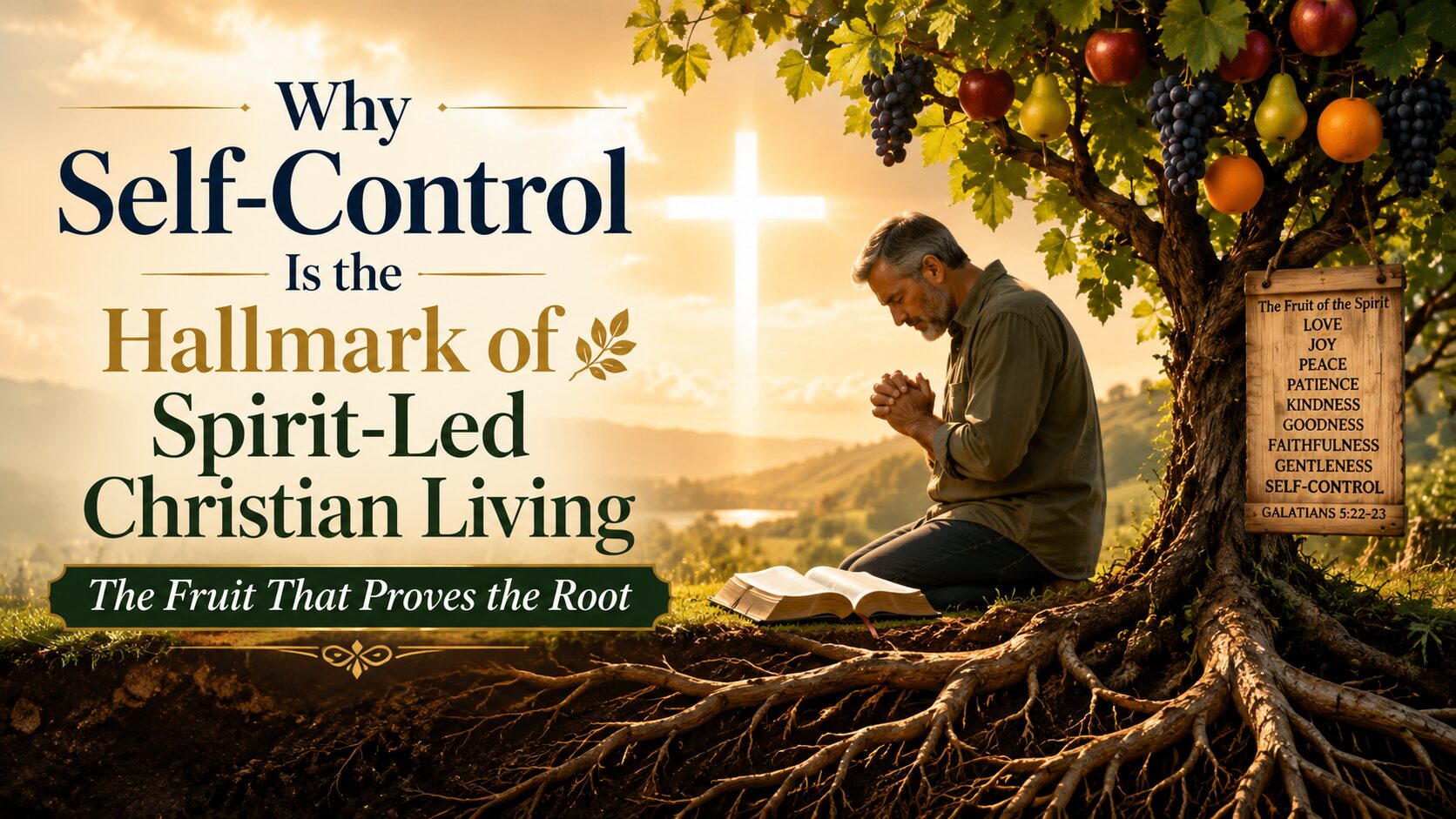
The apostle Paul writes in Galatians 5:22–23 (New King James Version): “But the fruit of the Spirit is love, joy, peace, longsuffering, kindness, goodness, faithfulness, gentleness, and self-control.” He then adds the powerful declaration: “Against such there is no law.”
This means that the righteous moral will of God does not condemn life governed by the Spirit. The fruit of the Spirit is no contradiction against God’s law; it is the fulfillment of the character God desires in His people. Those who live, lead, walk, speak, serve, and endure in the fruit of the Spirit are Spirit-led under condemnation but under the transforming power of grace.
Paul also declares in Romans 8:1, “There is therefore now no condemnation to those who are in Christ Jesus.” But the verse continues with a description of those who “do not walk according to the flesh, but according to the Spirit.” This is crucial. The freedom of the Christian is not a freedom to live carelessly in the flesh. It is freedom from sin’s dominion so that the believer may now walk in holiness, obedience, and Spirit-led devotion to Christ.
Likewise, Romans 12:1–2 calls believers to present their bodies as “a living sacrifice, holy, acceptable to God,” and to refuse conformity to the world by being transformed through the renewing of the mind. This stage is where the fruit of the Spirit becomes spiritual. It is not only what believers confess; it is how believers live.
Among the fruit listed in Galatians 5, one stands out as a defining test of Christian maturity: self-control. While love is the fountain of Christian virtue, and faithfulness is essential to endurance, self-control is often the battlefield where the sincerity of discipleship is proven. Many Christians can speak about love, desire joy, pray for peace, and admire gentleness, yet fail daily in the disciplined life of self-control.
Self-control is the spiritual guardrail that keeps love from becoming sentiment without obedience, zeal from becoming pride, liberty from becoming license, anger from becoming sin, desire from becoming bondage, and knowledge from becoming arrogance. It is the Spirit-enabled discipline by which believers bring their bodies, thoughts, appetites, words, emotions, and choices under the lordship of Jesus Christ.
In a world that celebrates excess, outrage, lust, greed, self-expression, revenge, and personal autonomy, self-control may be one of the clearest marks that a person belongs to Christ.
The Fruit of the Spirit Begins With the Spirit, Not Human Willpower
Before we examine each fruit, we must understand that Paul says “the fruit of the Spirit,” not “the fruit of human effort.” These virtues are not produced by natural discipline alone. They are the result of the Holy Spirit working within a surrendered life.
Jesus said in John 15:4–5, “Abide in Me, and I in you.” He continued, “He who abides in Me, and I in him, bears much fruit; for without Me you can do nothing.” Fruit comes from abiding. A branch does not produce fruit by detaching itself from the vine and trying harder. Fruit comes through union, dependence, nourishment, pruning, and life flowing from the vine.
This is why self-help techniques, motivational slogans, or outward moralism cannot manufacture Christian character. True spiritual fruit is born from the life of Christ in believers. As 2 Corinthians 5:17 says, “If anyone is in Christ, he is a new creation.” The fruit of the Spirit is the Spirit of that new creation life.
Paul contrasts the fruit of the Spirit with the fruits of the flesh in Galatians 5:19–21. The works of the flesh include adultery, fornication, uncleanness, hatred, contentions, jealousies, outbursts of wrath, selfish ambitions, envy, drunkenness, and similar things. These are not merely bad, sinful habits; they are signs of the flesh ruling the life.
Then Paul says in Galatians 5:24, “Those who are Christ’s have crucified the flesh with its passions and desires.” This is the foundation of self-control. The Christian does not negotiate with the flesh as though it has equal authority with the Spirit. The Spirit must be crucified. Its appetites must not be enthroned. Its impulses must not govern the believer.
The Holy Spirit does not merely comfort the believer; He also conquers the sinful patterns that once ruled the believer.
Love: The First Fruit and the Foundation of All Christian Character
The fruit of the Spirit begins in spiritual love because God Himself is love. 1 John 4:8 says, “He who does not love does not know God, for God is love.” Christian love is not merely an emotion, a preference, or cultural politeness. It is the sacrificial, holy, truth-filled love revealed in Jesus Christ.
Jesus said in John 13:34–35 that His disciples would be known by their love for one another. This love is not optional. It is the public mark of true discipleship.
Paul writes in 1 Corinthians 13:1–3 that a person may speak with tongues, possess prophetic gifts, understand mysteries, have great faith, give away possessions, and even suffer greatly, yet without love, it profits nothing. This means that spiritual gifts without spiritual fruit are dangerous. Gifts may draw attention, but fruit reveals transformation.
Love is also the fulfillment of the law. Romans 13:10 says, “Love does no harm to a neighbor; therefore love is the fulfillment of the law.” Yet biblical love does not rejoice in sin. 1 Corinthians 13:6 says love “does not rejoice in iniquity, but rejoices in the truth.”
Therefore, the fruit of love must be governed by holiness. Love without truth becomes compromise. Truth without love becomes harshness—the Spirit produces it.
Joy: The Strength of the Believer in a Troubled World
Joy is not the same as temporary happiness. Happiness often depends on circumstances, but spiritual joy is rooted in the Lord. The believer can have joy even in suffering because joy flows from salvation, hope, and fellowship with Christ.
Nehemiah 8:10 declares, “The joy of the LORD is your strength.” David prayed in Psalm 51:12, “Restore to me the joy of Your salvation.” Jesus told His disciples in John 15:11 that His words were given so that His joy might remain in them and their joy might be full.
The early church understood joy even under pressure. Acts 5:41 says the apostles rejoiced because they were counted worthy to suffer shame for the name of Christ. James 1:2–4 calls believers to count it all joy when they fall into various trials, knowing that such trials produce patience and maturity.
This joy is not a denial of pain. It is confidence that Christ is greater than pain. It acknowledges sorrow’s existence. Paul spoke of being “sorrowful, yet always rejoicing” in 2 Corinthians 6:10. Christian joy is deeper than emotional comfort because it is anchored in eternal hope.
Peace: The Rest of a Heart Reconciled to God
Peace is one of the greatest treasures of the Spirit-filled life. Before peace can rule the heart, it must first be made with God. Romans 5:1 says, “Having been justified by faith, we have peace with God through our Lord Jesus Christ.”
This peace is not the absence of warfare around us but the presence of God within us. Jesus said in John 14:27, “Peace I leave with you, the peace I grant to you.” He also said in John 16:33, “In the world you will have tribulation, but be of good cheer; I have overcome the world.”
The believer’s peace is guarded by prayer. Philippians 4:6–7 teaches that when believers bring their requests to God with thanksgiving, “the peace of God, which surpasses all understanding,” will guard their hearts and minds through Christ Jesus.
This peace also shapes how believers live with others. Romans 12:18 says, “If it is possible, as much as depends on you, live peaceably with all men.” Hebrews 12:14 commands believers to pursue peace with all people and holiness, “without which no one will see the Lord.”
Peace is not passivity. It is not a weakness. It is the settled strength of a life surrendered to God.
Longsuffering: The Power to Endure Without Becoming Bitter
Longsuffering, often understood as patience or forbearance, is one of the most necessary fruits in the Christian life. It is the Spirit’s work that enables believers to endure people, trials, delays, insults, disappointments, and persecution without surrendering to bitterness.
God Himself is longsuffering. 2 Peter 3:9 says the Lord is “longsuffering toward us, not willing that any should perish but that all should come to repentance.” Exodus 34:6 describes the Lord as merciful, gracious, and “longsuffering.”
If God has been patient with us, how can we refuse to be patient toward others?
Paul writes in Ephesians 4:1–2 that believers should walk worthy of their calling “with all lowliness and gentleness, with longsuffering, bearing with one another in love.” Colossians 3:12–13 instructs the people of God to put on tender mercies, kindness, humility, meekness, longsuffering, and forgiveness.
Longsuffering is especially needed in ministry, family life, leadership, and church fellowship. Without it, believers become easily offended, quick to abandon relationships, and slow to forgive. But the Spirit trains Christians to endure in love.
Kindness: The Beauty of Christ Displayed Through His People
Kindness is love expressed in tender action. It is not weakness, flattery, or people-pleasing. It is the gracious disposition of Christ made visible through words, conduct, mercy, and service.
Ephesians 4:32 says, “Be kind to one another, tenderhearted, forgiving one another, even as God in Christ forgave you.” Proverbs 19:22 says, “What is desired in a man is kindness.”
The kindness of God leads sinners to repentance. Romans 2:4 asks whether people despise the riches of God’s goodness, forbearance, and longsuffering, unaware that the goodness of God leads to repentance. Titus 3:4–5 speaks of the kindness and love of God our Savior appearing, not because of works of righteousness we have done, but according to His mercy.
Christian kindness is not selective. Jesus taught in Luke 6:35 that God is kind even to the unthankful and evil. Therefore, the believer must not reserve kindness only for those who are easy to love.
A harsh Christian misrepresents the gentleness of Christ. A cruel Christian contradicts the Spirit. Where Spirit rules, kindness will appear.
Goodness: Moral Integrity in a Corrupt Generation
Goodness is not merely being nice. It is moral uprightness, spiritual integrity, generosity, and devotion to what is pleasing to God. The good person, in the biblical sense, is one whose heart and actions reflect the character of God.
Psalm 34:8 says, “Oh, taste and see that the LORD is good.” Since God is good, His people must reflect goodness. Micah 6:8 says the Lord has shown man what is good: to do justly, love mercy, and walk humbly with God.
Jesus said in Matthew 5:16, “Let your light so shine before men that they may see your good works and glorify your Father in heaven.” Good works do not save us, but saved people are created for good works. Ephesians 2:10 says believers are God’s workmanship, created in Christ Jesus for good works.
Goodness also resists evil. Romans 12:21 says, “Do not be overcome by evil, but overcome evil with good.” This verse is vital in a hostile and morally confused world. The Christian does not overcome evil by becoming evil, but by remaining faithful to God’s character. The Christian overcomes evil by remaining faithful to God’s character.
Faithfulness: The Steadfast Life That Does Not Abandon Christ
Faithfulness is loyalty, reliability, endurance, and trustworthiness before God. It is the fruit that makes a believer consistent when feelings change, trials increase, temptations intensify, and public opinion turns against truth.
1 Corinthians 4:2 says, “It is required in stewards that one be found faithful.” Jesus said in Luke 16:10, “He who is faithful in what is least is also faithful in what is much.” Faithfulness is proven not only in great assignments but also in small acts of obedience.
God Himself is faithful. Lamentations 3:22–23 says His compassions fail not and “Great is Your faithfulness.” 1 Thessalonians 5:24 declares, “He who calls you is faithful, who also will do it.”
Because God is faithful, His people must also be faithful. Faithfulness keeps the believer from drifting. Faithfulness keeps inconsistency from destroying marriages, churches, ministries, families, and callings.
Revelation 2:10 says, “Be faithful until death, and I will give you the crown of life.” This is not casual Christianity. This is covenant endurance.
Gentleness: Strength Under the Control of the Spirit
Gentleness is often misunderstood as weakness, but biblical gentleness is strength submitted to God. It is power governed by humility. It is truth spoken without cruelty. It is a correction delivered without pride.
Jesus described Himself in Matthew 11:29 as “gentle and lowly in heart.” If the Lord of glory is gentle, no Christian should despise gentleness.
Paul instructed in Galatians 6:1 that if a man is overtaken in a trespass, spiritual believers should restore such a one “in a spirit of gentleness,” considering themselves lest they also be tempted. This means correction must not be driven by arrogance. The goal is restoration, not humiliation.
2 Timothy 2:24–25 says a servant of the Lord must not quarrel but be gentle to all, able to teach, patient, and in humility correcting those in opposition. 1 Peter 3:15 says believers should defend the hope within them “with meekness and fear.”
Gentleness is especially needed in a world addicted to arguments, outrage, public shaming, and verbal violence. The Spirit-filled believer must not reflect the Spirit’s character.
Self-Control: The Defining Fruit Many Christians Neglect
The final fruit listed in Galatians 5:22–23 is self-control. It may appear last, but it is not least. In many ways, self-control is the fence around the vineyard of Christian character. Without it, the other fruits are easily damaged.
Self-control is the Spirit-enabled ability to govern one’s desires, speech, emotions, thoughts, appetites, habits, and actions under the authority of Christ. It does not mean the believer saves himself by discipline. It means grace trains the believer to deny ungodliness and live soberly.
Titus 2:11–12 teaches that the grace of God that brings salvation also teaches believers to deny ungodliness and worldly lusts, and to live soberly, righteously, and godly in the present age.
That is self-control.
Self-control is where many Christians fail because it touches everything: the tongue, anger, lust, food, money, time, entertainment, ambition, pride, technology, relationships, and private life. A person may appear spiritual publicly but be defeated privately because self-control has not been cultivated.
Proverbs 25:28 says, “Whoever has no rule over his spirit is like a city broken down, without walls.” This is a serious image. A person without self-control is exposed, vulnerable, and easily tempted.
Paul understood the necessity of discipline. In 1 Corinthians 9:27, he wrote, “I discipline my body and bring it into subjection.” Paul was not speaking as an unbeliever seeking salvation. He was speaking as an apostle who understood that the body must not rule the Spirit.
Self-spirit is also essential in the mind. 2 Corinthians 10:5 speaks of bringing “every thought into captivity to the obedience of Christ.” The Christian cannot allow every thought to roam freely. Thoughts must be judged by truth, purified by Scripture, and submitted to Christ.
Self-control is essential in speech. James 1:19 says that believers must be “swift to hear, slow to speak, slow to wrath.” James 3:5–6 warns that the tongue, though small, can set great things on fire. Many believers lose spiritual credibility not because they lack doctrine but because they lack control of the tongue.
Self-control is essential in anger. Ephesians 4:26–27 says, “Be angry, and do not sin,” and warns believers not to give place to the devil. Uncontrolled anger becomes a door to spiritual destruction.
Self-control is essential in sexual purity. 1 Thessalonians 4:3–5 says the will of God is sanctification, that each believer should know how to possess his vessel in sanctification and honor. In a culture saturated with lust, the Christian must live differently.
Self-control is essential in sobriety and watchfulness. 1 Peter 5:8 says, “Be sober, be vigilant,” because the devil walks about like a roaring lion, seeking whom he may devour. Spiritual alertness requires disciplined living.
Self-control is not optional for leaders. 1 Timothy 3:2–3 teaches that a bishop must be temperate, sober-minded, of good behavior, not given to wine, not violent, not greedy, and gentle. Titus 1:7–8 also emphasizes that an overseer must be self-controlled, holy, and disciplined.
This is why self-control is a hallmark of Christian living. It is the visible proof that Christ is not merely admired but obeyed.
Romans 12: The Fruit of the Spirit in Daily Christian Conduct
Romans 12 offers one of the clearest pictures of what Spirit-led living looks like in practice. It begins by calling believers to present their bodies as a living sacrifice. This immediately confronts the modern idea that the body belongs to the self. For the Christian, the body belongs to God.
Romans 12:2 calls believers not to be conformed to this world. This requires self-control. The world constantly pressures believers to think, speak, spend, desire, dress, react, and live according to its pattern. The renewed mind resists that pressure.
Romans 12 then describes sincere love, hatred of evil, devotion to good, brotherly affection, diligence, fervency in Spirit, patience in tribulation, continuing steadfastly in prayer, generosity, hospitality, blessing persecutors, humility, peace, refusal to avenge oneself, and overcoming evil with good.
This chapter shows the fruit of the Spirit in action.
It indicates that the fruit of the Spirit is not limited to private devotion. It governs public conduct, relationships, reactions to enemies, church fellowship, and social witness. The believer does not simply claim to have the Spirit; he or she demonstrates the Spirit through spirit-led conduct.
Romans 8: No Condemnation for Those Who Walk According to the Spirit
Romans 8 is one of the most powerful chapters in the Bible concerning life in the Spirit. It is the Spirit who makes the great announcement that there is no condemnation for those who are in Christ Jesus, who do not walk according to the flesh but according to the Spirit.
This Spirit does not mean sin is harmless. It means that those who are truly in Christ are no longer under sin’s condemnation and are now empowered by the Spirit to live spiritually.
Romans 8:5 says those who live according to the flesh set their minds on fleshly things, but those who live according to the Spirit set their minds on spiritual things. Romans adds that being carnally minded is death, but being spiritually minded is life and peace.
This is why self-control matters so deeply. The mind must be governed. The desires must be governed. The body must be governed. The believer must not live as though the flesh has the final Word.
Romans 8:13 says, “If by the Spirit you put to death the deeds of the body, you will live.” Notice the phrase “by the Spirit.” Christian self-control is not flesh trying to defeat flesh, but rather the believer relying on the Holy Spirit to put sinful deeds to death. It is the believer relying on the Holy Spirit to put sinful deeds to death.
This is Spirit-empowered discipline.
Against Such, There Is No Law
When Paul says, “Against such there is no law,” he is showing that the fruit of the Spirit fulfills the law that could expose sin but not produce it in the sinful heart. The law can reveal sin, but the Spirit transfigures life.
The fruit of the Spirit does reflect God’s righteous standard. Love does not break God’s law. Joy does not break God’s law. Peace does not break God’s law. Longsuffering, kindness, goodness, faithfulness, gentleness, and self-control do not stand under divine condemnation.
A life filled with these fruits reflects the character God desires. Such a life does not need a law to restrain it from evil, because the Spirit is inspiring holy desires within it.
This is not lawlessness. This is the higher life of the Spirit.
The Spirit of Claiming Christ Without Bearing Fruit
Jesus warned that fruit matters. In Matthew 7:16–20, He said, “You will know them by their fruits.” A good tree bears good fruit, and a bad tree bears bad fruit. This warning should sober every believer.
Christian identity cannot be reduced to words alone. James 1:22 says that believers must be doers of the Word, not hearers only, or they will deceive themselves. James 2:17 says faith by itself, if it does not have works, is dead.
This does not teach salvation by works. It teaches that saving faith is living faith, and living faith produces evidence.
Jesus said in Luke 6:46, “But why do you call Me ‘Lord, Lord,’ and not do the things which I say?” That question remains urgent today. If Christ is Lord, then His people must submit to Him. Self-control is one of the clearest ways that submission becomes visible.
How Believers Grow in the Fruit of the Spirit
The fruit of the Spirit grows through abiding in Christ, obeying the Word, yielding to the Spirit, praying, and experiencing repentance, fellowship, discipline, and suffering. Growth is not instant perfection, but it must be real.
Believers grow by abiding in Christ. Jesus said in John 15:7 that if His words abide in us, we will ask what we desire, and it shall be done. The Word must dwell richly in the believer. Colossians 3:16 says, “Let the word of Christ dwell in you richly.”
Believers grow by walking in the Spirit. Galatians 5:16 says, “Walk in the Spirit, and you shall not fulfill the lust of the flesh.” This is daily, active dependence.
Believers grow by prayer. Jesus told His disciples in Matthew 26:41, “Watch and pray, lest you enter into temptation. The Spirit is indeed willing, but the flesh is weak.”
Believers grow as they renew their minds. Romans 12:2 teaches transformation through the renewing of the mind. The mind must be washed by Scripture and guarded from worldly corruption.
Believers grow by repentance. 1 John 1:9 promises that if we confess our sins, God is faithful to forgive and cleanse us from all unrighteousness.
Believers grow through testing. Romans 5:3–4 teaches that tribulation produces perseverance, character, and hope. God often uses difficulty to deepen the fruit of our faith.
Believers grow by putting off the old man and putting on the new. Ephesians 4:22–24 commands believers to put off the former conduct of the old man and to put on the new man created in true righteousness and holiness according to God.
Self-Control in a World Without Restraint
The present age often celebrates the very things Scripture warns against. People are encouraged to follow every desire, speak every thought, pursue every appetite, and define freedom as the absence of restraint. But biblical freedom is not slavery to desire. True freedom is the power to obey God.
Jesus said in John 8:34 that whoever sins is a slave to sin. But He also said in John 8:36, “Therefore if the Son makes you free, you shall be free indeed.”
Freedom in Christ means the believer is no longer ruled by sin. The Christian can say no to lust, rage, envy, drunkenness, greed, gossip, revenge, pride, and fear, and yes to righteousness.
1 Corinthians 6:19–20 reminds believers that their bodies are temples of the Holy Spirit and that they were bought at a price. Therefore, they must glorify God in body and Spirit, which pleases God.
This is the heart of self-control: “I belong to Christ.”
The world may turn against biblical truth. Culture may mock holiness. Temptation may increase. But the believer who walks in self-control declares daily that Jesus Christ is Lord over the body, mind, mouth, desires, time, money, and future.
The Church Needs the Fruit More Than Ever
The modern church does not merely need more noise, platforms, debates, conferences, or personalities. The church needs visible fruit. The world must see believers who love deeply, rejoice faithfully, live peacefully, suffer patiently, act kindly, do good, remain faithful, speak gently, and live with self-control.
A church filled with spiritual gifts but lacking spiritual fruit becomes unstable. A believer with knowledge but no self-control becomes dangerous. A leader with influence but no discipline becomes a stumbling block. A Christian with zeal but no gentleness wounds others. A person who claims love but lacks holiness misrepresents Christ.
The fruit of the Spirit is no inspiration. It is discipleship.
Conclusion: The Spirit-Led Life Is the Christ-Controlled Life
The fruit of the Spirit reveals the Spirit-filled life of Christ in the believer. Love shows His heart. Joy shows His victory. Peace shows His rule. Longsuffering shows His patience. Kindness shows His mercy. Goodness shows His righteousness. Faithfulness shows His covenant strength. Gentleness shows His humility. Self-control shows His lordship.
Self-control is not the enemy of grace. It is one of the fruits that grace produces. It is not legalism. It is Spirit-led obedience. It is not self-salvation. It is the disciplined life of one who has been saved, filled, and governed by the Holy Spirit.
The believer who lives in self-control does not claim ownership over life but confesses daily: “I am Christ’s.” Such a person presents the body as a living sacrifice, refuses conformity to the world, walks according to the Spirit, puts the Spirit at the deeds of the body, and lives free from condemnation in Christ Jesus.
Against such things, there is no law.
Therefore, let every believer examine the fruit. Let every leader examine the fruit. Let every church examine the fruit. Let every household examine the fruit. For the fruit knows the root, and the life surrendered to the Holy Spirit will increasingly bear the character of Jesus Christ.
In an uncontrolled world, self-control may be one of the clearest signs of true Christianity.
In a drifting generation, the Spirit-filled believer must stand as a living testimony to the fact that Christ transforms, governs, sanctifies, and keeps His people until His return.